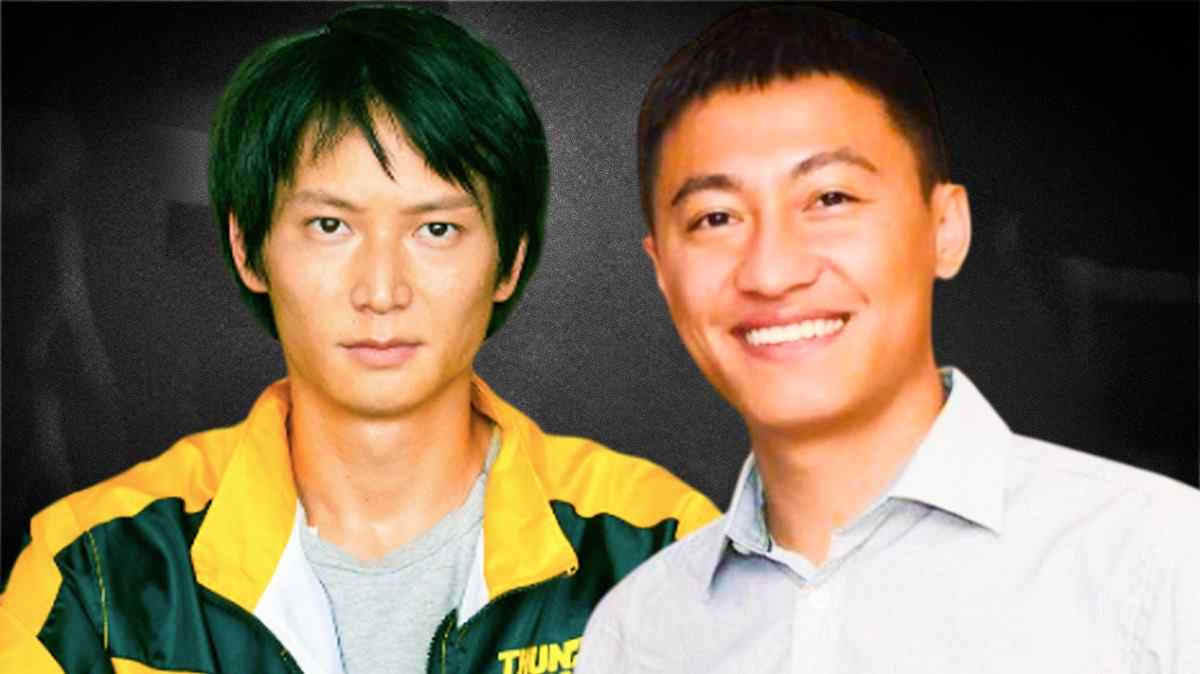
Netflix’s Thai original Mad Unicorn is a dramatized retelling of the country’s biggest rags-to-riches story. Set a decade ago, the show follows Santi, a young man who starts out at the bottom of the food chain, working at a sand mine. Seeing his boss not selling his company because he’d rather let it die in his own arms inspires Santi a little bit. Santi has a good eye for business ideas, and he’s instantly able to figure out what he can do to help his boss. All he wants in return is 1kg of baht to start his own business. It’s nice that Santi has people around him who believe in his ideas and have the capability to invest in him as a person.
Rather than the show being directly based on a true story, Mad Unicorn is very closely adapted from the story of Thailand’s first-ever unicorn startup, Flash Express, started by a man named Komsan Saelee. But unlike the real-life business genius, Santi’s story is one of revenge. It’s for dramatic flair that the show pegs him against a business tycoon who is much more experienced and essentially a mentor to Santi. This storyline, for effect, pushes us to see Santi as somewhat of a superhero, who will face any challenge head-on and always win. Sure, sometimes he loses, but in the grand scheme of things, he will eventually emerge victorious.
Santi’s origin story lies in his being dirt poor and not having anything to start with. This is what pushes him to work hard to achieve his goals. An easy comparison is to put Santi and Ken on opposite sides, just as Kanin pitted them against each other, even if it wasn’t initially clear. For someone like Santi, who has nothing to fall back on and who grew up with not enough money to even buy himself some noodles, it’s not hard to gamble all that you have. But for someone like Ken, who has a reliable father and is a second-generation businessman/billionaire, it doesn’t come as naturally, because he feels like he must protect his wealth and not take major risks. This is a marked difference between the two of them, which leads to Santi ending up on top thanks to his risk-taking nature.
In Mad Unicorn, Santi has his idea stolen by his mentor, so while he was initially driven by the force of ambition, he’s later pushed by his need for revenge. But the difference here is that when someone’s trying to grow fueled by negative emotions like revenge, they end up making the wrong decisions, often failing at their ventures. In Santi’s case, though, his moral compass is Xiaoyu, a woman who comes into his life like a storm and then saves his company from financial ruin as its CFO. Santi and Xiaoyu’s relationship is very professional, but they both also end up developing feelings for each other. Santi continues to hold onto her right till the end, when she leaves after her promised time at Thunder Express is over. But while she leaves Santi heartbroken, she also leaves him financially stable, or rather, she leaves the company ready to ascend to new heights.
In real life, Komsan has a supportive wife, whom he thanks often, but in the show, we only ever see Santi fall in love with Xiaoyu, despite knowing she was going to leave at some point. I think this adds a layer to the character, when usually in such situations, we’ll see them get the girl, and it’ll be a life-altering moment for them; now they have to worry about building a future for their family, etc. In Mad Unicorn, the family that Santi focuses on is his mom and his brother, and Xiaoyu is the one focused on saving up to raise a family of her own with the love of her life, Liam. I especially liked the fact that she was able to tell Liam that she had feelings for Santi, but they will get through this hurdle after the business becomes successful.
Santi uses his Chinese language skills to learn about the market abroad and then uses what he’s learned in the homeland to improve his own lifestyle. The story being so personal is what makes it resonate with so many. When Ken delivers the same mountain story about noodles and eating them with rice, it doesn’t have as deep an impact as Santi talking about it out of his own experience. Because his mom taught him Mandarin, he was able to talk to the Chinese about his business idea and create a scalable global idea while still being specific to his homeland. It’s a genius idea that comes out of desperation, but also skill.
Santi is the kind of man who will not back away from a gamble, even if it comes at a loss for him. I suppose it’s the inflated ego of a new business owner who knows what it’s like to have nothing. Take, for example, how he recklessly reduces the price from 25 baht to 19 baht despite Xiaoyu telling him that it won’t be feasible in the long run. He also tells Alice Wang that he won’t budge from 15%, even if it means he’d lose the only investor he had. Santi threw his money out of the car while driving with Ruijei to make a point to him. “I’m losing money every second you’re not working with me.” While sometimes effective, if he didn’t have teammates to bring him back to earth, Santi would have failed too. He just always had someone to clean up his mess.
I read earlier that Komsan’s failure led him to suicidal thoughts, but we don’t see Santi go that far. Instead, we see him consider quitting the job, letting all his people down, which I suppose, in a way, for a person like him, would feel like the same thing. But Santi doesn’t give up easily at all; in fact, when everything is messed up near the end of the show, he even meets with an accident and nearly dies, but he’s so eager to save the company and the many jobs he’s given to people that he pushes himself to deliver the last parcel himself and then falls unconscious. Again, when it came to money, too, Santi was always ready to spend his own or cut his own paycheck if it meant saving his company.
At the end of the day, Santi was a man who looked at his business as his baby. While he may have briefly considered giving up, he never actually did. As a person in a position of power, he never let his people down, making him a great leader and business owner. Santi’s story may not be unique, but it is still inspirational, and while it’s super dramatized, there are definitely some skills we can pick up from his personality. It’s hard to be a selfless businessman, but Santi proves that it’s doable. As of today, the real-life CEO of Flash Express, Komsan lives in Bangkok City, Thailand, from where he manages the operation of the company to great heights like his fictional counterpart.
